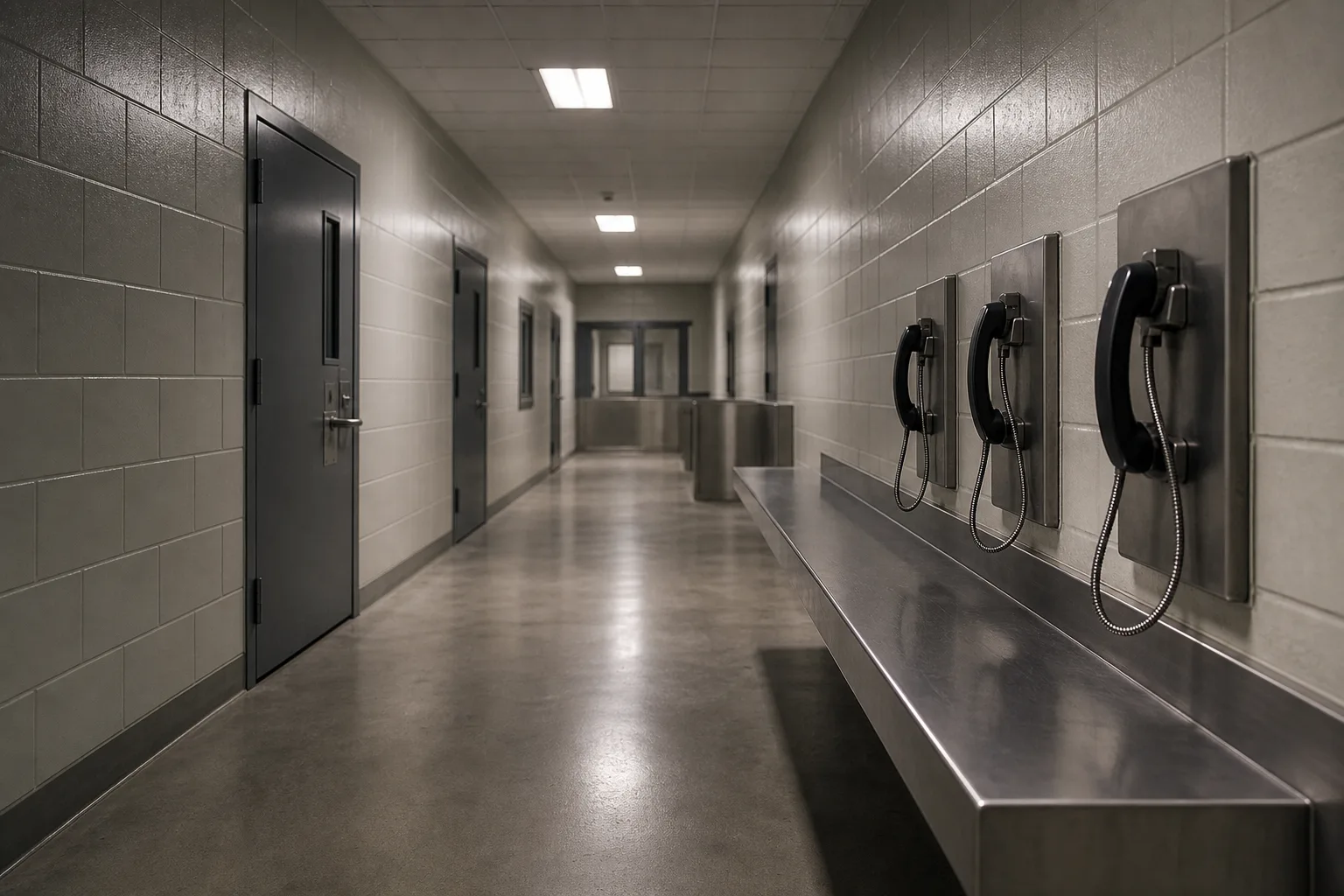
The hours after an arrest feel like one continuous emergency, and that is exactly why people make expensive choices in the wrong order. In practice three separate decisions are moving through that window on three separate clocks: who represents the defendant, how the release question gets answered, and what to do about the first offer a prosecutor floats. They do not all come due at once. One of them is genuinely urgent, one is urgent only because money is involved, and one can almost always wait longer than the person facing it believes.
What actually happens between the handcuffs and the courtroom
Booking comes first: fingerprints, photographs, property inventory, a health screening in most jails, and a wait that has nothing to do with the strength of the case. Somewhere in that stretch a charging decision gets made, usually by a prosecutor reviewing what the arresting officer wrote, and the charges filed are frequently not the charges announced at arrest. Then comes a first appearance, called arraignment in many states, where a judge reads the charges, addresses release conditions, and asks about counsel. In most jurisdictions that happens within about two court days, which is why a Friday arrest is worse than a Tuesday one.
Nothing in that sequence requires the defendant to explain anything. The single decision with a real deadline inside those first hours is whether to keep talking, and the cost of getting it wrong is not measured in dollars. Statements made during booking, in a patrol car, on a recorded jail phone line, or to a cellmate follow the case all the way to sentencing. Everything else on this list can be reconsidered later. That one cannot.
The counsel decision, and what waiting on it costs
Choosing a lawyer is urgent in the sense that early representation changes outcomes, and not urgent in the sense that the retainer must be signed before dawn. A defendant who says nothing and asks for counsel has preserved every option. A family that wires a five figure retainer to the first firm that answered a 2 a.m. call has usually paid a premium for speed, and premiums paid under duress are rarely refunded in full when the case turns out to be a misdemeanor that resolves in two hearings.
The honest comparison is between an appointed public defender, assigned at arraignment after a financial screening, and retained counsel paid by the hour or by flat fee. Appointed counsel is free or nearly free and carries a heavy caseload. Retained counsel costs real money and buys availability, which matters most in the pretrial stretch when calls need returning and a bond hearing needs preparing. Before hiring anyone, ask what the fee covers, what triggers a second fee, and who will actually stand at the podium.
There is a middle path worth knowing about. A family can hire a criminal defense lawyer for the release hearing alone, on a limited scope agreement, and then decide about full representation once the charges are filed and the discovery is visible. That arrangement is not offered everywhere, but it is common enough to ask for, and it separates the decision that has a deadline from the decision that has a price tag.
The bail question is mostly a money question
Release is decided at or near the first appearance, and the options usually run from release on recognizance, to an unsecured bond, to cash bail, to a surety bond posted through a bail agent. The cost differences are stark. Cash bail posted directly with the court comes back at the end of the case, minus fees, if the defendant appears. A bail agent's premium, typically a set percentage of the bond amount, is gone permanently no matter how the case ends, and collateral pledged against the rest, often a car title or a deed, stays at risk until the case closes.
That distinction is the one families most often miss at three in the morning. Paying a nonrefundable premium on a Saturday to avoid two more nights in custody is sometimes the right call and sometimes a waste of money that a Monday hearing would have made unnecessary. Ask the jail what the scheduled bond amount is, ask whether a release hearing is already calendared, and price both paths before signing anything with a bail agent.
The first plea offer is a starting number
Prosecutors in busy state courts often extend an early resolution offer at or shortly after arraignment, sometimes with a stated expiration. It arrives before the defense has seen body camera footage, lab results, dispatch logs, or the officer's full report, which means it is priced on the government's version alone. The Bureau of Justice Statistics is the federal agency responsible for tracking how criminal cases move through state courts, and the plain fact that most cases resolve by plea is precisely why the timing of the first offer deserves scrutiny rather than gratitude.
Early offers do sometimes carry a genuine discount, particularly in diversion programs with limited slots. The way to tell is to ask what specifically gets worse if the answer comes in thirty days, and to weigh that against what discovery might reveal. A collateral consequence, immigration status, a professional license, public housing eligibility, can make a seemingly generous offer far more expensive than the sentence suggests.
Sort the three decisions by their real deadlines and the pressure drops considerably. Silence today, a release plan priced honestly by Monday, counsel chosen with the charging documents in hand, and the plea question answered last, once someone has read the file.